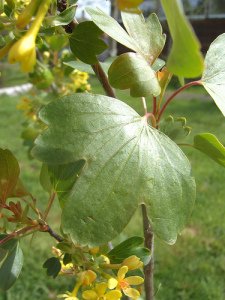
Native oak trees (Quercus spp.) are one of California’s most beautiful natural resources. Several native oak species, such as coast live oak (Quercus agrifolia), blue oak (Quercus douglasii), and valley oak (Quercus lobata), are common along the coastal plains, foothills, and valleys. As development pushes further into native plant communities where oaks are common or dominant in the native landscape, these majestic natural treasures often succumb to poor landscape design and management practices.
Problems Landscaping Under Native Oak Trees
Native oak trees are incredibly tough. The have evolved to withstand California’s wet winters, summer heat in the inland valleys, periodic fires, and dry summers. They are real survivors when left to their own devices.

Quercus lobata - Valley Oak
However, California’s native oak trees have not adapted to life in a high water-use landscape where exotic plants are watered frequently all summer long. Too much summer water is detrimental to native oaks which are adapted to dry soil in the summer.
Watering heavily during California’s typically dry summer months encourages the oak’s mortal enemy: fungus.
Warm, wet soil fosters the rapid growth of oak-attacking fungus species. In most cases, fungal infestations are terminal for California native oak trees. Young trees which are growing vigorously are usually able to resist fungal attacks for a number of years. But older trees are less able to fight off fungal attacks and slowly succumb to the fungal infection. Oak trees grow slowly and they also decline and die slowly.
Proper Plant Selection Can Help Keep Oak Trees Healthy
If you have a site that has mature oak trees growing on it in California. There are a few best management practices (BMPs) that landscape architects implement to protect oaks and keep their clients happy.
- Minimize grading around oak trees
- Do not change the drainage pattern around mature trees
- Do not cut major roots
- Use grade beams to avoid compacting soil in the dripline
- Use native or low water-use plants under oak trees
While a great deal has been written about using low-water native plants for planting under oak trees, some exotic species may also be planted with great success.
Some examples of common exotic plants that grow well under and near oaks include the following plants.
- Abelia grandiflora — Glossy Abelia
- Arbutus unedo — Strawberry Tree
- Berberis darwinii — Darwin’s Barberry
- Buddleia davidii — Butterfly Bush
- Daphne odorata — Fragrant Daphne
- Grevillea rosmarinifolia — Rosemary Grevillea
- Myrsine africanum — African Boxwood
- Myrtus communis — Myrtle
- Nandina domestica — Heavenly Bamboo
- Nerium oleander — Oleander
- Ochna serrulata — Mickey Mouse Plant
- Pinus mugo — Mugo Pine
- Plumbago auriculata — Cape Plumbago
- Prunus lusitanica — Portugal Laurel
- Punica granatum ‘Wonderful’ — Pomegranate
- Sarcococca ruscifolia — Fragrant Sarcococca
- Teucrium fruticans — Bush Germander
- Viburnum suspensum — Sandankwa Viburnum
- Viburnum tinus ‘Spring Bouquet’ — Laurustinus
- Xylosma congestum ‘Compacta’ — Xylosma
Best Exotic Shrubs For Planting Under California Native Oak Trees
These shrubs use low to moderate amounts of supplemental irrigation and can be used around oaks.
HINT: Make sure you know the botanical names for the California Supplemental Exam (CSE) since LATC does not use common names on the exam.
Abelia grandiflora — Glossy Abelia
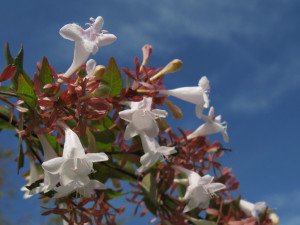
Abelia grandiflora - Glossy abelia
Glossy abelia is one of the most dependable exotic shrubs for planting underneath California-native oak trees. The arching stems form a mounded shrub which grows from three to seven feet tall and wide. The small, pointed leaves are shiny and bronze-colored in spring and fall. Several cultivars are available which range from medium-tall shrubs to spreading groundcover plants.
Arbutus unedo — Strawberry Tree
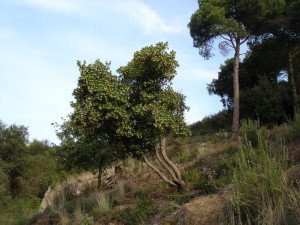
Arbutus unedo - Strawberry Tree
Strawberry tree is a Mediterranean native plant that looks right at home in California. It’s attractive, reddish, shaggy bark is conspicuous and becomes an asset with age. Use strawberry tree as a slow-growing screen up to 25 feet tall with an eight foot spread. Plant outside dripline in full sun or light shade. While the red fruit which is reminiscent of a strawberry is edible, it is not tasty. Arbutus unedo ‘Compacta’ remains a smaller shrub to 6 feet tall with an equal spread. With some pruning, older shrubs can be trained to resemble small, multi-trunked specimen trees.
Berberis darwinii — Darwin’s Barberry
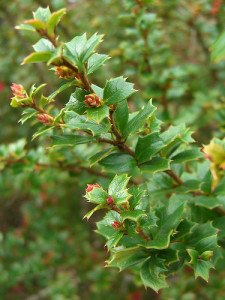
Berberis darwinii - Darwin’s Barberry
Darwin’s barberry is a very dense mound of dark, glossy, well-armed leaves. With age, this barberry grows between five and seven feet tall. The inconspicuous flowers produce dark blue berries which attract birds. Spiny foliage makes it a good barrier plant and discourages people from cutting through that part of the landscape. Plant at edge of dripline in full sun for the best appearance.
Buddleia davidii — Butterfly Bush
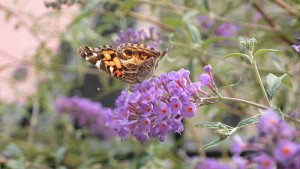
Buddleia davidii — Butterfly Bush
Butterfly bush quickly grows to be ten to 12 feet tall. The shrub’s form is arching with flowers borne on the tips of the stems. The gray-green leaves grow to six inches long. It’s colorful, honey-scented flowers are a foot long, and as the name suggests, attractive to butterflies. Prune back hard in winter to encourage vigorous new growth and maximum flower production. Plant outside dripline in full sun.
Daphne odorata — Fragrant Daphne
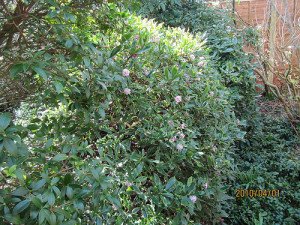
Daphne odorata - Daphne
Daphne slowly grows to be a four to six foot tall shrub that spreads up to eight feet wide. The neat evergreen, glossy leaves are three inches long. In winter, the sweetly fragrant flowers perfume the air around the plants. The one real downside of daphne is it’s absolute need for excellent drainage; poor drainage is the biggest killer of this plant. Several cultivars are available with pink or white flowers and tastefully variegated foliage. Plant in partial shade and don’t overwater.
Grevillea rosmarinifolia — Rosemary Grevillea
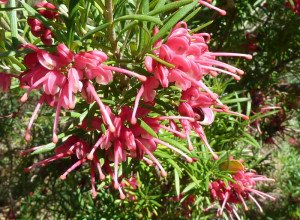
Grevillea rosmarinifolia — Rosemary Grevillea
Rosemary grevillea forms a dense, dark green shrub four to five feet tall and wide. The spiny, dark-green leaves are green on top and white underneath. Flowers rosy-red flowers bloom for a long time and attract native hummingbirds.
Myrsine africanum — African Boxwood
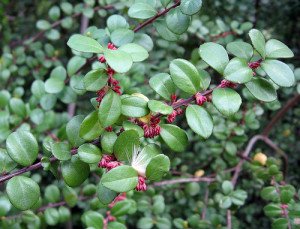
Myrsine africanum — African Boxwood
African boxwood has stiff, vertical stems which are clothed in small, dark green leaves with burgundy stems. This underused shrub Will grow to six feet tall but can be easily maintained by shearing to any height. This is a great choice for a formal hedge in full sun or shade.
Myrtus communis — Myrtle
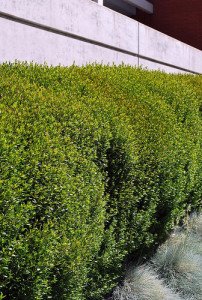
Myrtus communis - Myrtle
Myrtle is a dense rounded shrub which grows from five to eight feet in height and spread. The fine-textured foliage is dark green and aromatic. Plant myrtle at the edge of dripline in full sun or partial shade. Tolerates shearing and makes a fine formal or informal hedge. Easy-to-grow and tolerant of most landscape conditions.
Nandina domestica — Heavenly Bamboo
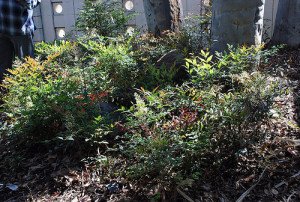
Nandina domestica - Heavenly Bamboo
Heavenly bamboo is an upright shrub which grows to five feet tall. The delicate evergreen compound foliage creates a lacy appearance. In fall, the foliage changes color to orange, red, or pink and lasts all winter long. Heavenly bamboo is highly resistant to oak root fungus and is generally adaptable to less than optimal growing conditions. Several compact and dwarf cultivars are available and can be used to replace annual color or as a groundcover.
Nerium oleander — Oleander
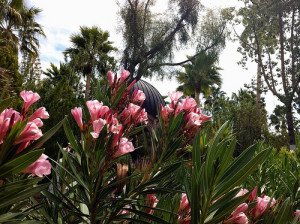
Nerium oleander - Oleander
Oleander is frequently used as a flowering shrub for screening objectionable views. Several large and compact varieties are available from nurseries. Dwarf forms grow four feet tall and slightly wider. Full-sized cultivars can grow to an impressive 12 feet tall and wide. The white, pink, red, or salmon flowers bloom in summer and fall. Plant oleander at edge or outside dripline in full sun. Plants grown in considerable shade are leggy and bloom infrequently.
Ochna serrulata — Mickey Mouse Plant
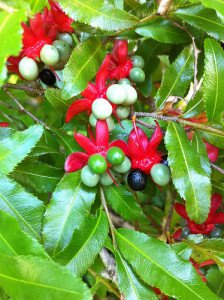
Ochna serrulata — Mickey Mouse Plant
The Mickey Mouse plant is aptly named due to it’s unusual berry formation. With time, it will grow four to eight feet tall and wide. The narrow evergreen leaves are bronzy-green in spring and turn dark green as summer progresses. Plant at the edge of dripline in full sun or partial shade.
Philadelphus virginalis — Mock Orange
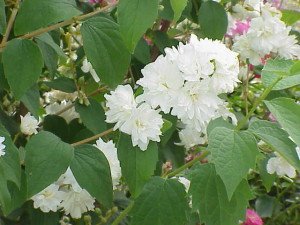
Philadelphus virginalis - Mock Orange
Mock orange is a vase shaped deciduous shrub which reaches three to seven feet tall and wide depending on variety. The pure white flowers are delightfully fragrant in spring. Prune out one-third of the oldest canes after it is done flowering to maintain it’s vigor and control it’s size. Best in partial shade in inland gardens.
Pinus mugo — Mugho Pine
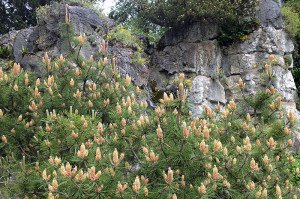
Pinus mugo - Mugo Pine
Mugo pine forms a neat, compact dome of attractive needles and grows up to 4 feet tall and wide. Dark green needles and a mountain-like or Asian look to rock gardens.
Plumbago auriculata — Cape Plumbago
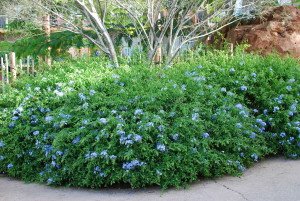
Plumbago auriculata - Cape Plumbago
Cape plumbago is a spreading, arching plant that grows up to 10 feet tall and equally wide. The sky-blue flowers bloom nearly year-round near the coast and from spring through fall in the inland valleys. Plant cape plumbago at the edge of dripline in full sun for the best flower production. One drawback is that the plant can be damaged by frost. Prune out dead wood to rejuvenate every few years.
Prunus lusitanica — Portugal Laurel

Prunus lusitanica — Portugal Laurel
Portugal laurel is an old-school California landscape plant which forms a 6 foot to 15 foot tall shrub. The handsome foliage is dark and glossy. Dark purple berries decorate the plants and feed the birds in summer. Plant Portugal laurel outside the tree’s dripline. Prune to any size or shape; good as a hedge or screen.
Punica granatum ‘Wonderful’ — Pomegranate
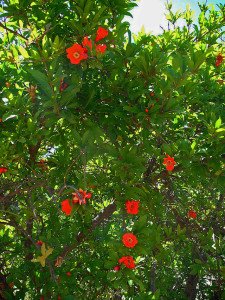
Punica granatum - Pomegranate
Pomegranate is a large, vase-shaped shrub that grows to 10 feet tall in low-water situations. The narrow deciduous foliage is glossy and medium green. Although pomegranate doesn’t fruit prolifically in low water situations, it produces an abundance of bright orange flowers in spring and summer. Pomegranate is best planted outside the oak tree’s dripline. Several highly ornamental dwarf pomegranate cultivars are available which grow three feet tall (or less). Dwarf pomegranates are grown for the ornamental (although inedible) fruit and attractive foliage and form. Pomegranates combine well with native and Mediterranean plants.
Sarcoccoca ruscifolia — Fragrant Sarcococca
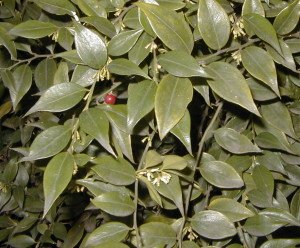
Sarcoccoca ruscifolia — Fragrant Sarcoccoca
Fragrant sarcoccoca can grow to six feet tall but usually stays lower. The dark green leaves are glossy and very attractive in the shady garden. In winter, the inconspicuous but fragrant flowers perfume the garden. It’s flowers are followed by red fruit. There is a low-growing groundcover variety also available in the trade; Sarcoccoca hookerana humilis is a low ground cover variety which only grows 18 inches tall and spreads wider. Plant in partial or full shade.
Teucrium fruticans — Bush Germander
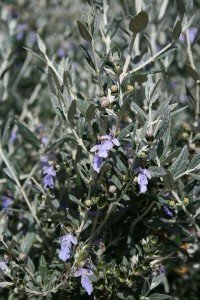
Teucrium fruticans — Bush Germander
This tough shrub will grow to four feet to eight feet tall and as wide. Its attractive silver-gray foliage and blue flowers blend well with native and exotic plants. One really outstanding characteristic about bush germander is that it blooms prolifically most of year. Prune to shape the bush in spring. Low maintenance.
Viburnum suspensum — Sandankwa Viburnum
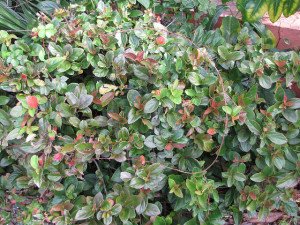
Viburnum suspensum — Sandankwa Viburnum
This evergreen screening shrub grows to 10 feet tall but can be pruned or sheared to any size. The foliage is an attractive shade of dark green and is the plant’s most outstanding characteristic. Unfortunately, its flowers and fruit are inconspicuous. Plant where it will get good air circulation to prevent pest and disease problems.
Viburnum tinus ‘Spring Bouquet’ — Laurustinus
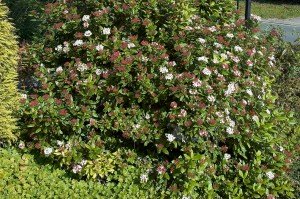
Viburnum tinus ‘Spring Bouquet’ — Laurestinus
This handsome evergreen shrub is maybe to the Mediterranean region and grows well with low moderate maintenance and irrigation. Foliage is dark green with large two to three-inch creamy white flower clusters in spring. This is a well-behaved shrub which looks good mixed with native plants or more common exotic shrubs.
Xylosma congestum ‘Compacta’ — Xylosma
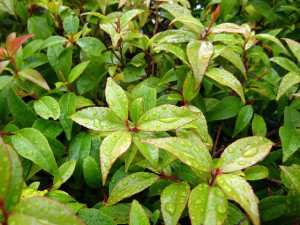
Xylosma congestum ‘Compacta’ — Xylosma
This handsome, well-behaved shrub grows three to five tall and has a dense, domed form. The light, golden-green leaves are attractive and glossy. The branches have some spines and it can be used as a low barrier plant to control circulation in the landscape. Tolerates tough conditions and looks good in sun or shade.
California Native Oak Trees Can Coexist With Exotic Plants
The right plant selection makes all the difference to the overall aesthetics of the landscape and the long-term health of existing native oak trees on a site. While there are many arguments to be made for exclusively planting California-native plants, many exotic plants are also suitable for planting under oaks.
The California Supplemental Exam for landscape architects has many questions about suitable plant material for the state of California. I strongly recommend you learn what grows well with native oak trees. You might be surprised how many questions this can help you answer successfully.
Photo Credits:
pellaea